Women's Legal Rights to Water: Key to Sustainable Development
IWLA Director's Statement Commemorating World Water Day
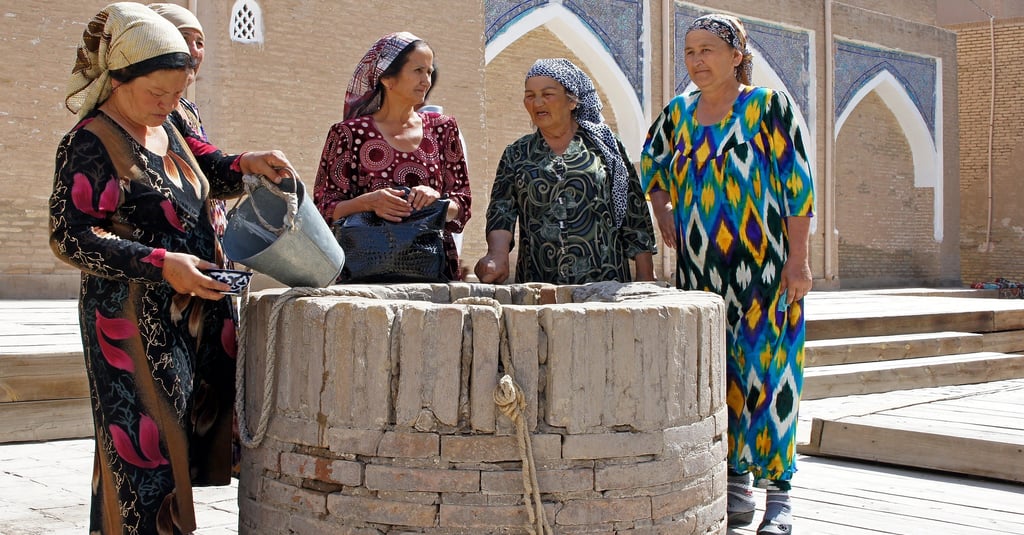
As communities around the globe celebrate World Water Day 2026, the IWLA highlights that access to safe water is not only a basic human necessity, but also a fundamental human right. This year, IWLA spotlights women’s legal rights to water and participation in water governance and some of the obstacles to the implementation of their rights. The human right to water and sanitation was formally recognized by the United Nations General Assembly in 2010, but millions of women still lack enforceable legal protections ensuring equitable access, ownership, management, and decision-making authority over water resources. Legal recognition of women’s water rights means equal access to safe and affordable drinking water, protection from discrimination in water governance, land and property rights to secure access to water, representation in water management institutions and accountability mechanisms when rights are violated. Without legal frameworks that explicitly protect women’s rights to water, inequality persists across rural and urban communities alike. Gender equality and access to water are both reflected in Agenda 2030 and the Sustainable Development Goals (SDGs) through SDG 5 to ‘Achieve gender equality and empower all women and girls’ and SDG 6 to ‘Ensure availability and sustainable management of water and sanitation for all’.
At the transboundary level, water management programmes, water-related law, or river basin organisations (RBOs) rarely reflect a gendered approach. The most recent reporting exercise under SDG 6.5.2 collected gender-related information in transboundary water cooperation, finding that only 19% of basins have transboundary water arrangements that include “promotion of equality and inclusion, including gender equality” as a topic of cooperation under the agreement, and that only 15% of basins incorporate gender-related aspects into their joint water governance institutions. There is some improvement in this regard, for example, as the Zambezi Watercourse Commission (ZAMCOM) in Africa published a Gender Mainstreaming Strategy and Implementation Plan for the Zambezi River Basin, providing a framework to ensure gender mainstreaming.
The Academy supports women’s legal rights in line with SDG 5 and SDG 6 to ensure that every woman has the legal right and practical ability to access safe water and to participate in decision-making in water governance in their communities, as well as at the national and international levels through river basin or intergovernmental organisations
David J Devlaeminck
Director of the International Water Law Academy
djdevlaeminck@live.com
Photo Credit: Global Water Partnership. No changes were made to this photo.
Contact the Academy
Reach out to us anytime for expert guidance anytime, ideas for collaboration and more!
© 2026. All rights reserved.
International Water Law Academy
Academic Excellence,
Professional Relevance